Armis
Armis - Overview
Armis Centrix is an enterprise-grade Cyber Exposure Management Platform powered by the world's largest AI-driven Asset Intelligence Engine, tracking over 6 billion assets globally and adding 1-1.5 million new assets daily. Unlike traditional discovery-focused tools, Armis combines comprehensive asset visibility with real-time behavioral threat detection, vulnerability prioritization, and proactive threat intelligence, providing complete attack surface management from discovery throug remediation.
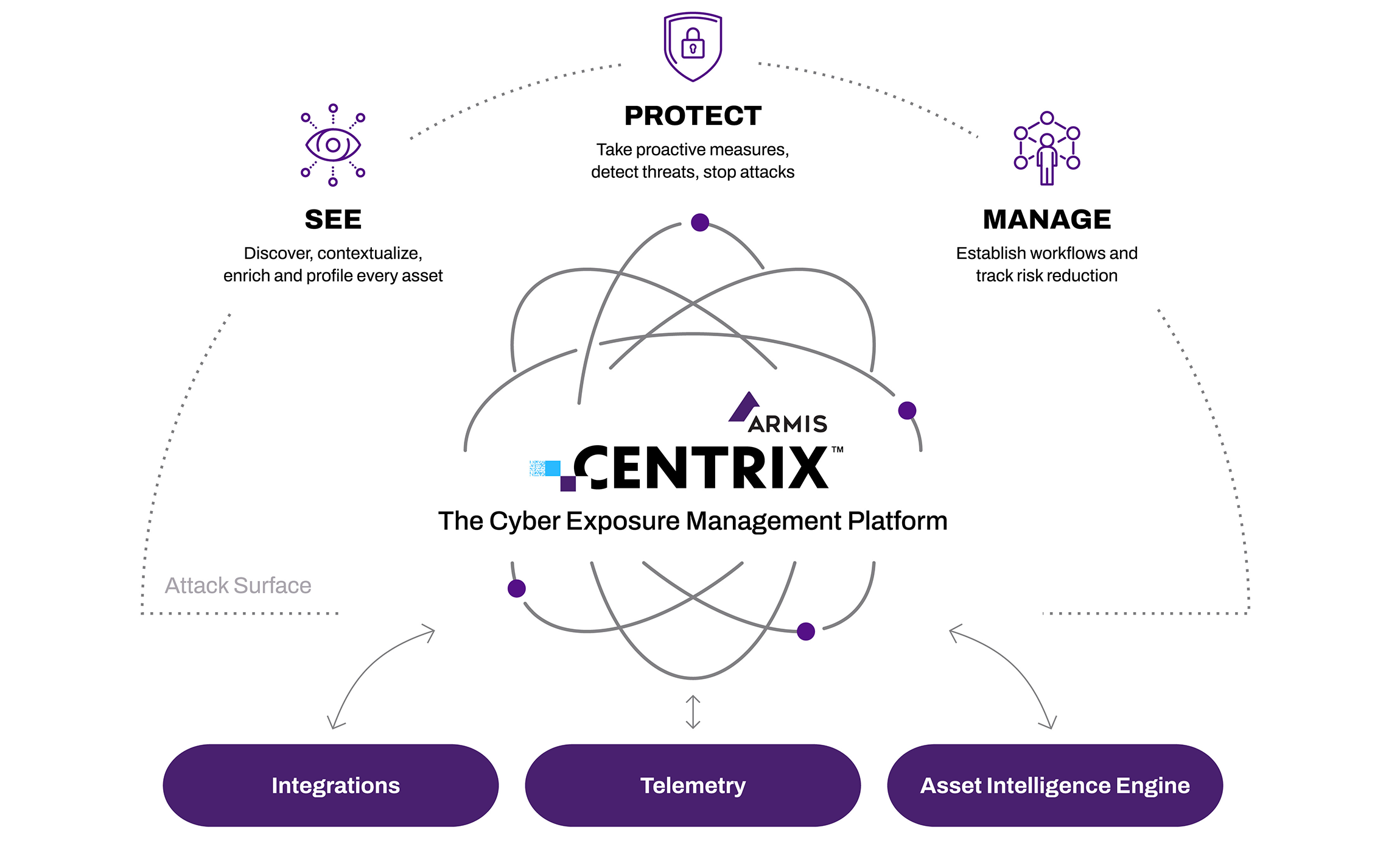
- Core Philosophy: "See, Protect, and Manage" the entire attack surface. Armis doesn't just discover assets, it continuously monitors their behavior, detects anomalies indicating compromise, prioritizes vulnerabilities by business impact, and provides early warning of emerging threats before they're publicly disclosed
- Key Market Position: Leader in agentless device security; dominant in healthcare (IoMT) , manufacturing (OT/ICS), and critical infrastructure; pioneered behavioral anomaly detection for unmanaged devices
- Business Model: Cloud-native SaaS platform with modular licensing. Customers choose modules based on use case (Asset Management, OT/IoT Security, Medical Device Security, Vulnerability Prioritization, Early Warning). On-premises deployment available for air-gapped/regulated environments.
How to Position
Primary Target Customer Segments
Healthcare Organizations
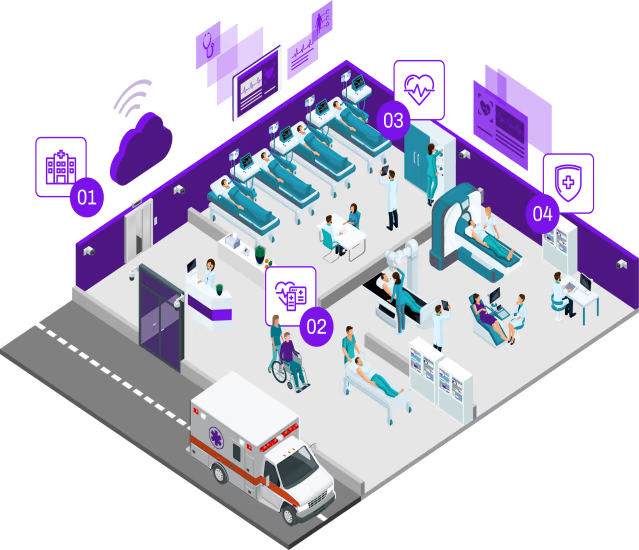
Healthcare is Armis's strongest vertical. Hospitals have thousands of connected medical devices (10-15 per patient bed), most running specialized operating systems that can't run security agents. These devices handle patient data, support life-critical functions, and are increasingly targeted by ransomware
Why Armis wins in healthcare:
- Medical Device Security module with clinical risk scoring
- Deep classification of IoMT devices (infusion pumps, monitors, imaging equipment)
- HIPAA compliance reporting
- FDA recall and safety alert integration
- Device utilization tracking
Manufacturing and Industrial Operations
Manufacturing environments blend IT and OT, computers alongside industrial equipment, PLCs, SCADA systems. Traditional security tools can't see OT devices; traditional OT tools don't integrate with IT security. Armis bridges this gap with unified IT/OT visibility and behavioral monitoring
Why Armis wins in manufacturing:
- OT/IoT Security module with industrial protocol expertise (MODBUS, DNP3, OPC-UA, BACnet, Profinet, Siemens S7, etc)
- Safe passive monitoring (no disruption to production)
- IT/OT convergence detection (lateral movement between IT and OT)
- IEC62443, NIS2 compliance support
- Behavioral baselines for industrial equipment
- Behavioral anomaly detection of suspicious OT activity
Critical Infrastructure and Utilities
Energy, water, transportation: critical infrastructure faces sophisticated threats (nation-state actors) and strict regulations (NIS2, NERC CIP). Armis provides the visibility and threat detection these environments require, with on-premises deployment for air-gapped networks
Why Armis wins in critical infrastructure:
- On-premises deployment for air-gapped environments
- Early Warning for nation-state threat awareness
- OT protocol expertise for SCADA, ICS systems
- NIS2, NERC CIP compliance support
- Behavioral monitoring for critical systems
- Network segmentation validation and enforcement
Enterprise IT Organizations
Large enterprises with complex, distributed IT environments, multiple data centers, cloud providers, thousands of endpoints. They need comprehensive visibility, behavioral threat detection, and prioritized vulnerability management
Why Armis wins in enterprise:
- Asset Intelligence Engine provides unmatched classification accuracy (6B+ asset profiles)
- VIPR consolidates vulnerabilities from multiple tools (50:1 reduction in alert volume)
- Behavioral detection catches threats EDR misses (unmanaged devices, IoT, OT)
- CMDB enrichment keeps asset inventory current
- Network segmentation recommendations
- Integration with existing security tools (SIEM, SOAR, firewalls)
Financial Servies
Banks and financial institutions face regulatory pressure, sophisticated attackers, and complex hybrid environments. Armis provides comprehensive visibility and threat detection across IT, cloud, and IoT
Why Armis wins in financiel services:
- VIPR for vulnerability prioritization across complex environments
- Early Warning for proactive threat intelligence on threat actors targeting finance
- Behavioral anomaly detection for insider threats
- Compliance reporting for SOX, PCI-DCC, DORA
- Asset intelligence for shadow IT detection
Modules
Armis Centrix for Asset Management and Security
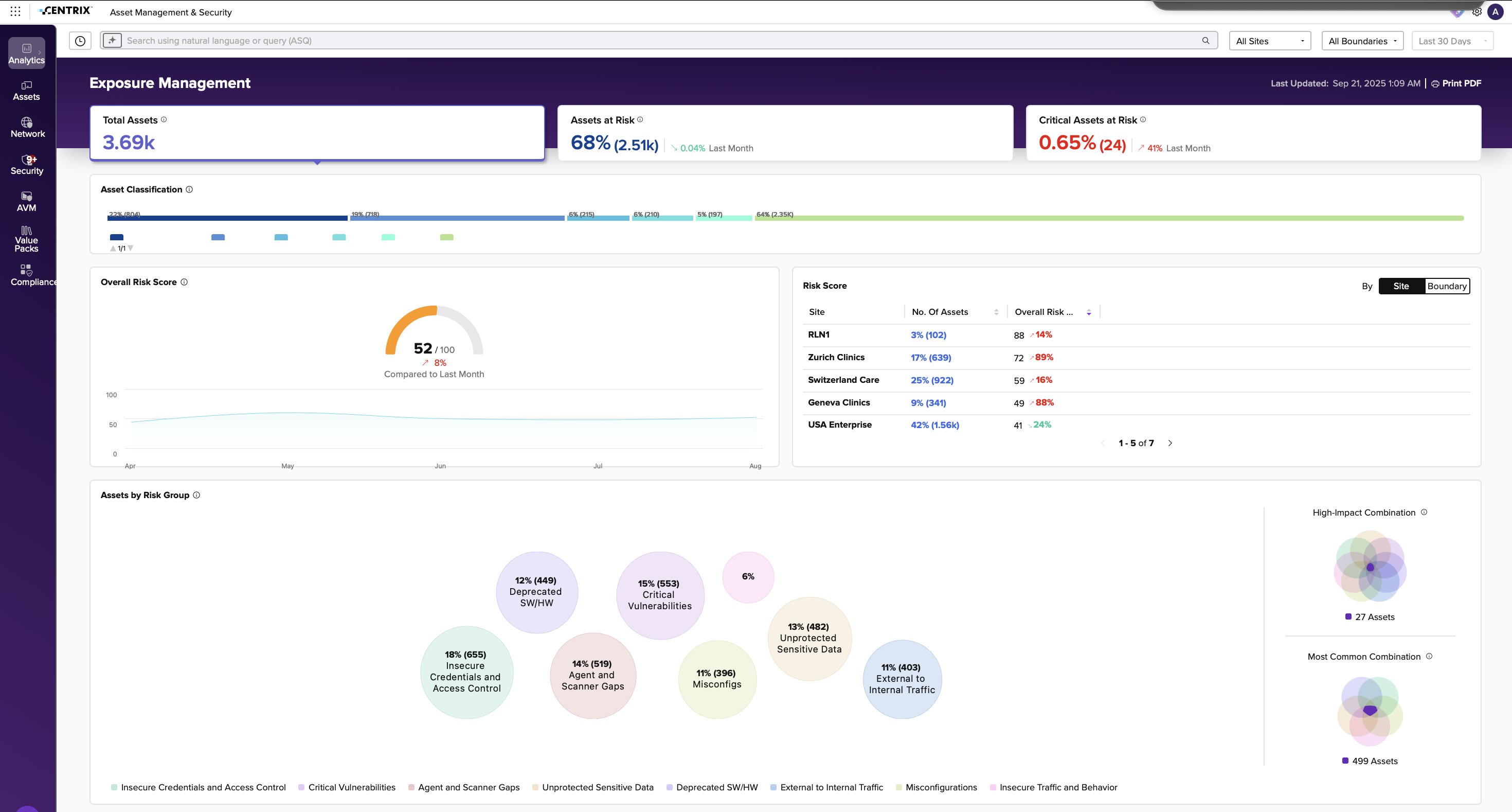
What is it: The foundational module of the Armis platform. It provides complete agentless asset discovery, classification, and behavioral threat detection across IT, OT, IoT and cloud environments
Core Capabilities
- Agentless discovery of all connected devices (managed, unmanaged, IoT, OT, cloud)
- AI-powered asset classification using the Asset Intelligence Engine
- Real-time asset inventory with automatic CMDB enrichment
- Behavioral monitoring and real-time anomaly detection
- Network segmentation recommendations
- Compliance reporting (inventory, security posture, behavioral risks)
- Integration with security tools (SIEM, SOAR, firewalls, EDR) This is the entry point to Armis. No other module works without it
When to position:
- Organization needs complete asset visibility across hybrid environments
- They're struggling with shadow IT devices, unknown IoT or unmanaged endpoints
- They need to enrich their CMDB with accurate, real-time asset data
- They want behavioral threat detection beyond what EDR provides
- They need to understand not just "what exists" but "what should it be doing"
Armis Centrix for OT/IoT Security (SaaS)
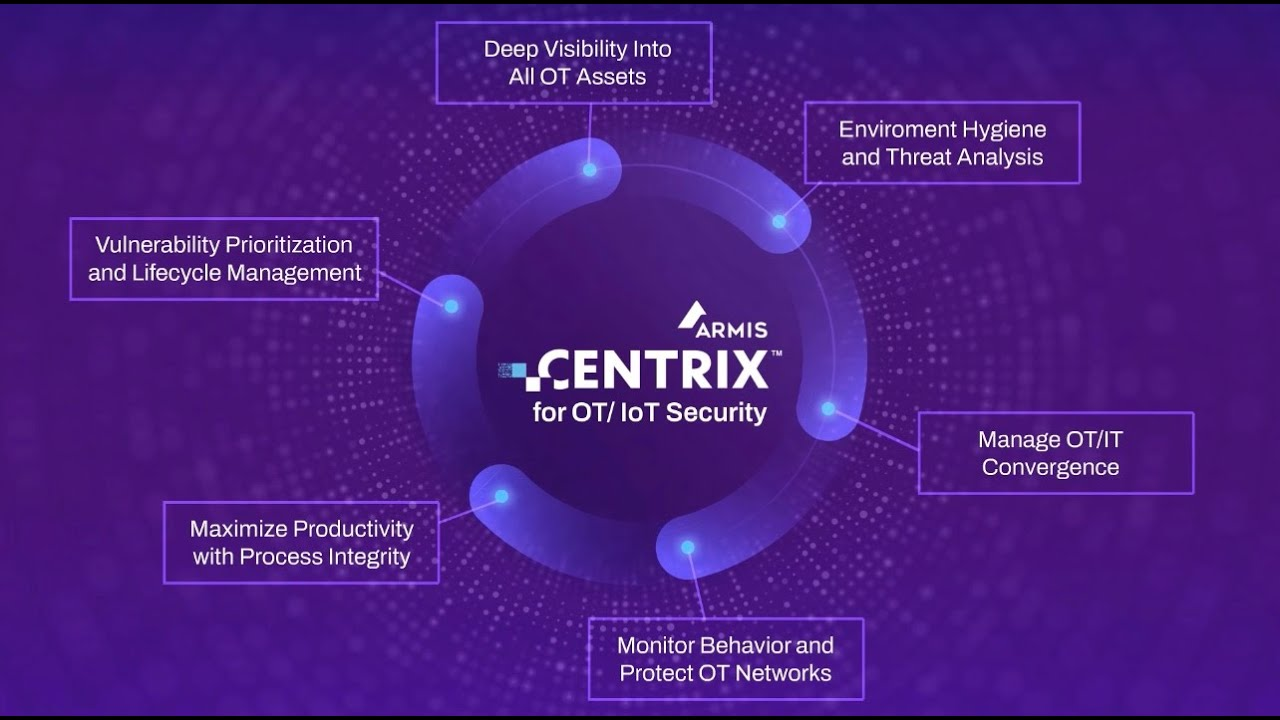
What is it: Specialize module for industrial and operational technology environments delivered via cloud SaaS. Adds deep OT protocol understanding, industrial asset classificatoin, and OT-specific threat detection to the core platform
Core Capabilities
- Deep visibility into OT assets: PLCs, HMIs, SCADA systems, industrial controllers, BMS, sensors
- Industrial protocol analysis (MODBUS, DNP3, OPC-UA, BACnet, Profinet, Siemens S7, etc)
- OT-specific behavioral baselines and anomaly detection
- IT/OT convergence monitoring (detecting lateral movement between IT and OT)
- Industrial threat intelligence integration
- Safe passive monitoring (no risk to production)
- Compliance reporting for IEC62443, NERC CIP, NIS2
Who needs it: Organizations with significant OT/Industrial environments
- Manufacturing plants
- Energy and utilities (power generation, distribution, water treatment)
- Critical infrastructure (transportation, logistics)
- Building management systems (smart buildings, data centers)
When to position
- Customer has operational technology they need to discover and protect
- They're concerned about IT/OT convergence creating attack paths
- They need compliance reporting for industrial regulations (IEC62443, NIS2)
- They want behavioral monitoring of industrial equipment without production disruption
- They need to understand industrial protocols and device-normal behavior
Armis Centrix for OT/IoT Security (On-Premises)
What is it: Same capabilities as OT/IoT Security SaaS, but deployed entirely on customer infrastructure. No data leaves the customer's network
Core Capabilities
Identitical to SaaS version, plus:
- Full air-gap support (no internet connectivity required)
- Data sovereignty (all data remains on-premises)
- Customer-controlled updates and maintenance
- Integration with on-premises SIEM, SOC tools
- Custom protocol support for proprietary industrial systems
Who needs it: Organizations with strict data residency or air-gap requirements
- Defense and military contractors
- Government agencies with classified networks
- Highly regulated industries (nuclear, certain healthcare)
- Organizations in countries with data soverignty requirements
- Organizations with strict data residence requirements
When to position
- Customer explicitly required air-gapped deployment
- Regulatory requirements prohibit cloud-based security tools
- Customer's security policy mandates on-premises data processing
- OT network is physically isolated from internet
- Data soverignty or residency is non-negotiable
Armis Centrix for Medical Device Security
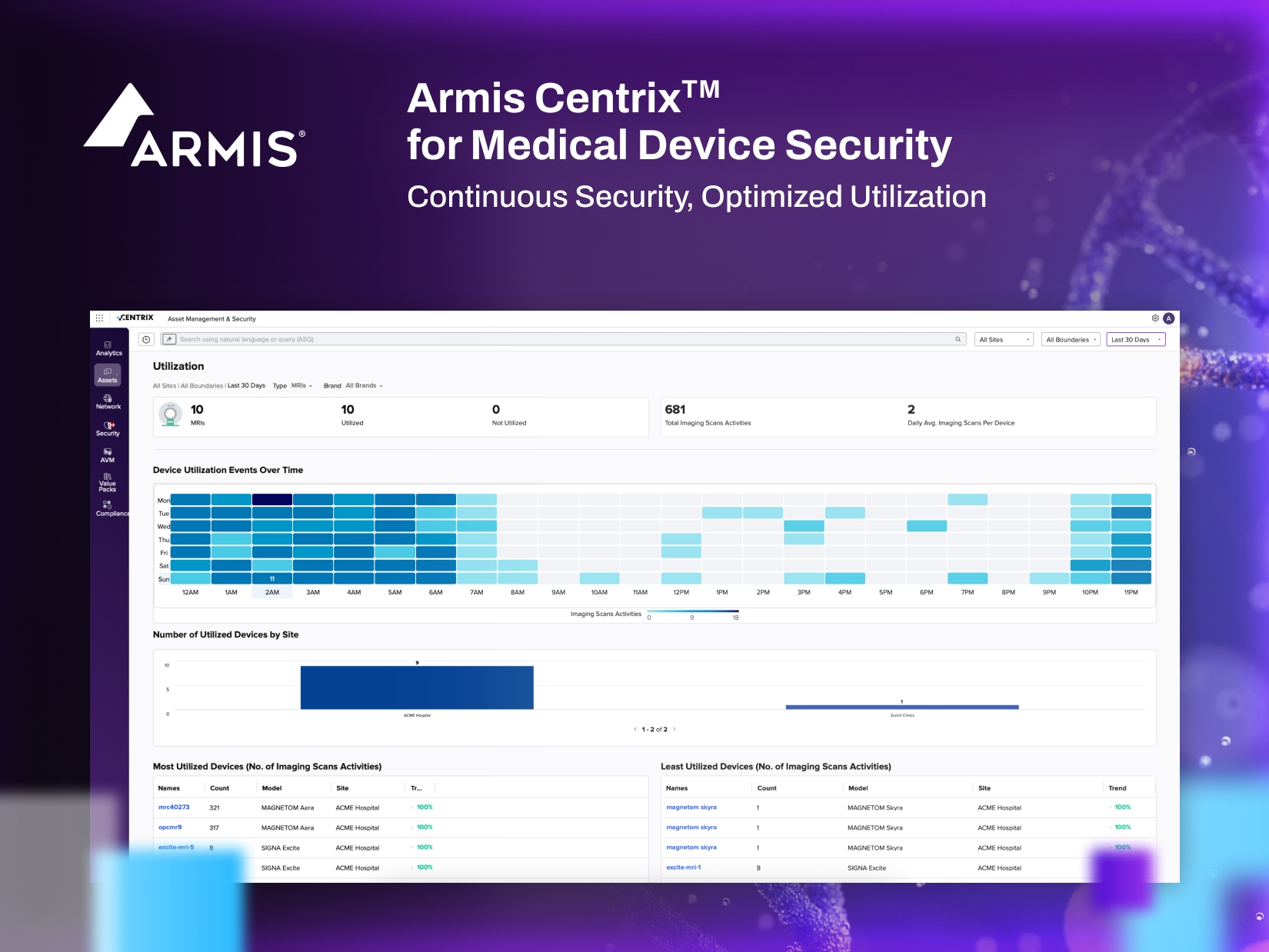
What is it: Healthcare-specific module designed for Healthcare Delivery Organizations (HDOs). Adds deep medical device (IoMT) classification, clinical risk scoring and healthcare-specific threat detection
Core capabilities
- Discovery and classification of all medical devices (infusion pumps, patient monitors, imaging equipment, diagnostic devices, wearables, ventilators, anesthesia machines etc)
- Clinical risk scoring (prioritizes vulnerabilities by impact on patient safety and care continuity)
- FDA recall and safety alert integration (automatic notification when recalled devices are discovered in hospital)
- Medical device utilization tracking (operational efficiency: understand which devices are actually used)
- Detection of healthcare-specific threats (ransomware targeting medical devices, PHI exfiltration, device hijacking)
- Network segmentation recommendations for clinical environments
- Patient safety impact analysis (which devices support which clinical functions)
Who needs it: Healthcare organizations
- Hospitals and health systems
- Ambulatory surgery centers
- Diagnostic imaging centers
- Long-term care facilities
- Any organization with connected medical devices handling patient data
When to position
- Customer is a healthcare organization with medical devices
- They're concerned about medical device security and patient safety
- They need compliance documentation and audit evidence
- They want to optimize medical device utilization (operational benefit)
- They've experienced or are concerned about healthcare-targeted ransomware
Key Differentiator: Medical device security includes clinical risk scoring: vulnerabilities aren't just scored by CVSS; they're scored by impact on patient care. A vulnerability on a life-sustaining device (ventilator, patient monitor, infusion pump) gets higher priority than the same vulnerability on a non-critical device (eg a medical workstation used for charting)
Armis Centrix for VIPR (Vulnerability Prioritization and Remediation)
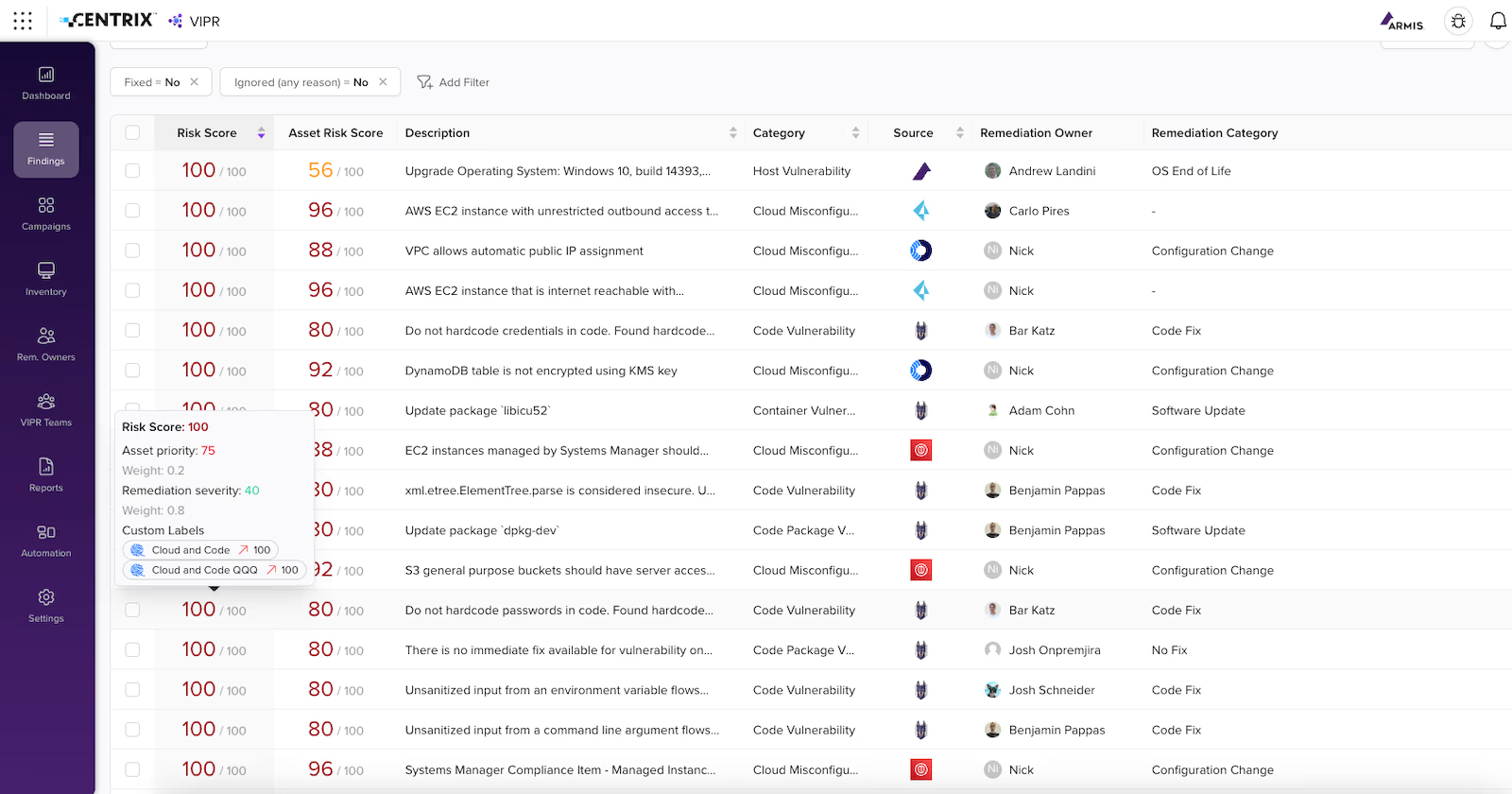
What is it: Advanced Vulnerability Management module that consolidates, deduplicates, prioritizes, and automates remediation of vulnerabilities across all assets and security tools
Core Capabilities
- Consolidation: Ingests vulnerability findings from multiple sources (Qualys, Tenable, Rapid7, Crowdstrike, Defender for cloud, cloud security tools, application security tools)
- Deduplication: Reduces alert volume up to 50:1 by correlating duplicate findings across tools (same vulnerability detected by multiple scanners becomes one item)
- AI-Powered Prioritization: Scores vulnerabilities based on:
- CVSS severity
- Asset criticality and business impact
- Exploit availability and likelihood
- Environmental context (internet-facing vs internal)
- Threat intelligence (is this vulnerability being actively exploited?)
- Clinical context (if healthcare, impact on patient safety)
- Ownership Assignment: AI predicts who should own remediation based on asset ownership patterns and organizational structure
- Remediation workflow: Bidirectional integration with ticketing systems (ServieNow, Jira, Azure DevOps) for automated ticket creation, tracking and closure
- Remediation Tracking: Dashboards showing remediation progress, SLA compliance, risk reduction over time
- Compliance Evidence: Automatic documentation of vulnerability discovery, prioritization, and remediation for compliance audits
Who needs it: Organizations with:
- Multiple vulnerability scanning tools generating overwhelming alert volumes
- Mature security operations needing prioritization beyond CVSS scores
- Distributed remediation teams requiring clear ownership assignment
- Compliance requirements for vulnerability management
- Difficulty tracking vulnerability remediation across teams and systems
When to position
- Customer is drowning in vulnerability alerts from multiple tools
- They struggle to determine which vulnerabilities to fix first
- Remediation ownership is unclear ("who's responsible for this server?")
- They need to demonstrate vulnerability management progress for compliance
- They have multiple vulnerability scanners feeding different teams
- They mention "alert fatigue" or "we can't keep up with patching"
What happens without VIPR
- Asset management shows vulnerabilities on discovered assets, but prioritization is basic (CVSS-based)
- No consolidation of findings from external vulnerability scanners
- No deduplication
- No automated ownership assignment
- No integrated remediation workflow, customers use external ticketing manually
- Security teams spend significant time triaging and assigning vulnerabilities manually
- Remediation tracking is fragmented across multiple tools
Armis Centrix for Early Warning
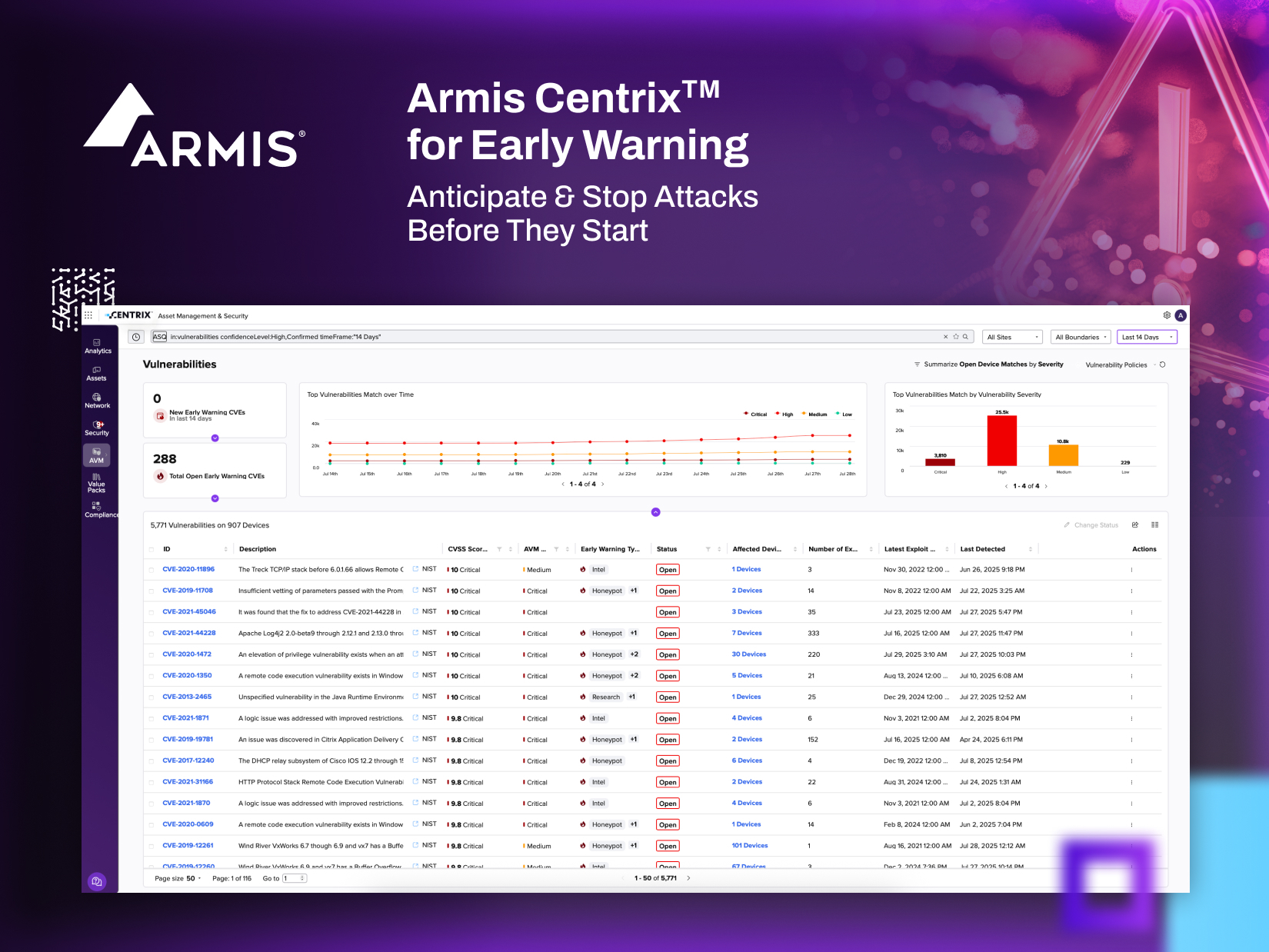
What is it: Proactive threat intelligence module that provides early warning of vulnerabilities and threats before they're publicly disclosed. Leverages dark web monitoring, AI-powered analysis, dynamic honeypots and human intelligence.
Core Capabilities
- Pre-disclosure vulnerability alerts: Identifies vulnerabilities 75-693 days before they appear in CISA KEV catalog (sometimes before vendor is even aware)
- Dark web monitoring: Scours underground forums, marketplaces, and hacker communities for emerging exploits, attack planning, credential leaks targeting organization
- Dynamic honeypots: Deploys decoy systems to observe attacker techniques in real-time
- AI-powered threat prediction: Predicts attack behavior, tactics, and likely targets based on organizational profile
- Threat actor tracking: Monitors specific threat actors relevant to customer's industry and geography
- Supply chain vulnerability intelligence: Alerts to vulnerabilities in vendors and dependencies
- Actionable intelligence: Provides specific countermeasure recommendations and attack mitigation guidance
Who needs it: Organizations with:
- Mature security operations wanting to shift from reactive to proactive
- High-value targets (financial services, critical infrastructure, government, healthcare)
- Advanced threat concerns (nation-state actors, sophisticated cybercrime)
- Security teams that can act on early warning intelligence quickly
- Competitive advantage motive (knowing about threats before competitors)
Where to position
- Customer has mature security operations and wants to "shift left" on threat detection
- They're a high-value target likely to be specifically targeted by threat actors
- They want competitive advantage through earlier threat awareness
- They have resources to act on early warning intelligence
- They're in critical infrastructure, government, finance or healthcare
- They mention concern about nation-state actors or advanced threats
What happens without early warning
- Vulnerability prioritization is based on publicly known vulnerabilities
- Organizations reacts to threats after they're disclosed
- No visibility into dark web activity or pre-attack reconnaissance
- Security posture is reactive rather than proactive
- Competitors with Early Warning intelligence learn about emerging threats first
Core Features
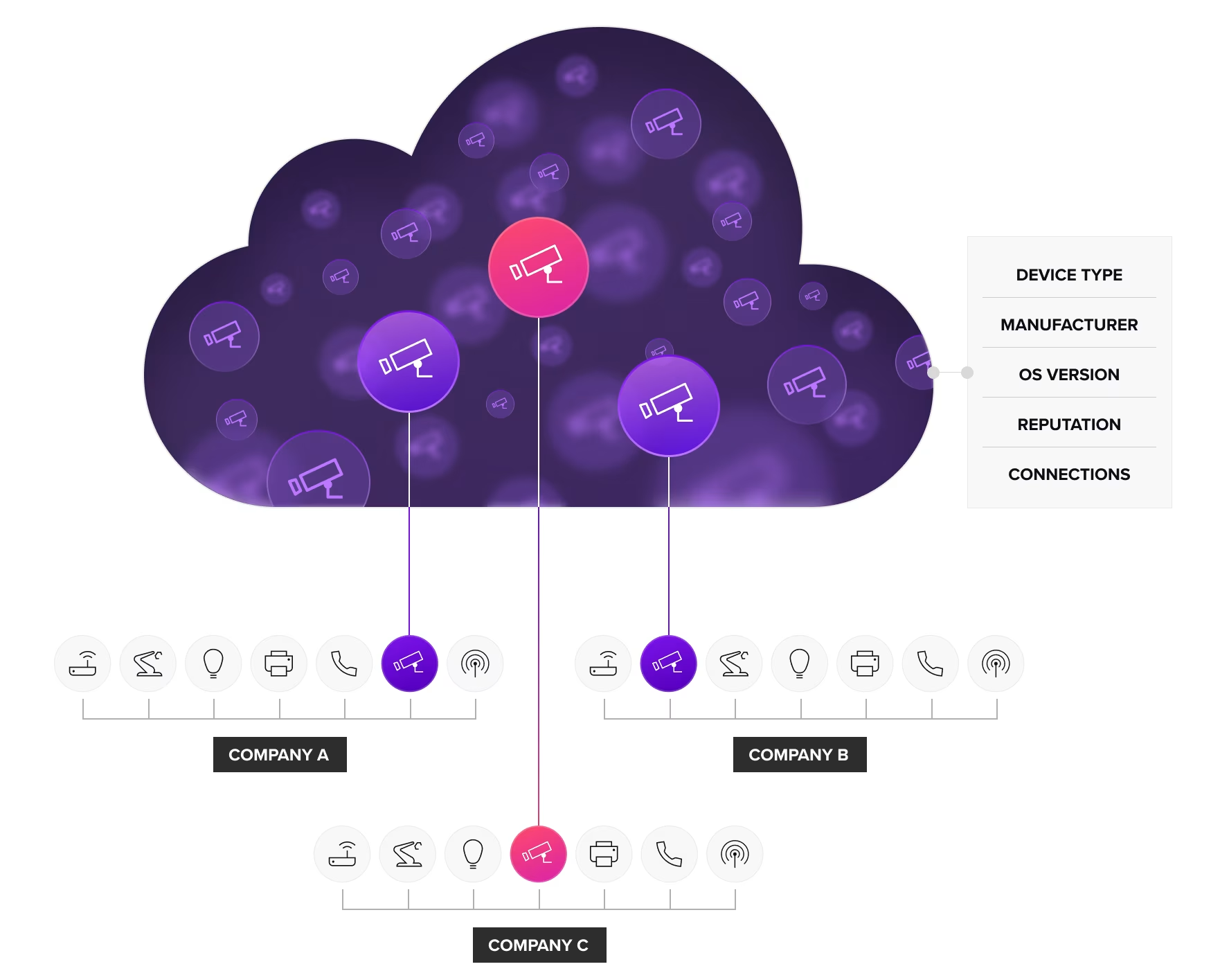
Asset Intelligence Engine (Foundation of everything)
The Asset Intelligence Engine is Armis's core differentiator. It's a crowd-sourced, AI-powered knowledge base tracking over 6 billion assets worldwide and adding 1-1.5 million new assets daily. It's the largest asset intelligence database in the industry
How it works
- Armis collects anonymized behavioral and configuration data from all monitored assets across all customers worldwide
- AI/ML builds behavioral baselines for every asset type ("this is how a Philips IntelliVue monitor normally behaves," "this is how an Extreme Networks 5420F switch behaves")
- When an asset in your environment deviates from baseline, Armis detects the anomaly
- No learning period required, baselines are pre-built from global data
- Continuously improves as new assets are observed and classified
Why it matters
- Instant behavioral detection: No weeks/months of learning required like competitors
- Unknown device classification: Even obscure devices can be identified through behavioral patterns
- Global threat intelligence: Threats detected at one customer immediately inform detection at all customers
- Continuous improvement: Engine learns from 1-1.5 million new assets daily, improving accuracy
- Unmatched accuracy: Classification accuracy far exceeds traditional fingerprinting
Agentless Discovery and Classification
Armis discovers and classifies every device without requiring agents. This is critical for environments with devices that can't run agents (IoT, medical devices, OT equipment)
How it works
- Passive traffic analysis observes network communications
- Integrations with existing infrastructure (firewalls, switches, wireless controllers, cloud platforms, vulnerability scanners) provide additional visibility
- Asset Intelligence Engine classifies devices based on behavioral patterns observed
- No installation required, no agents to deploy or update
Advantages
- No agents to deploy, manage or update
- Works on devices that can't run software (IoT, medical, OT)
- No performance impact on monitored devices
- Rapid deployment (hours to days, not weeks)
- Discovers shadow IT automatically
Behavioral Anomaly Detection
Armis continuously monitors asset behavior and detects anomalies indicating compromise, misconfiguration or policy violations.
What it detects
- Communication with known malicious hosts
- Lateral movement between network segments
- Protocol anomalies (device using unexpected protocols or ports)
- Behavioral deviations (device doing something it's never done before)
- Policy violations (unencrypted sensitive data transmission, unauthorized access attempts)
- Abnormal traffic volume (device communicating far more than normal)
- New services or ports opening on devices
Response Options
- Alert security team with context and severity
- Automatic disconnection or quarantine (via NAC/firewall integration)
- Integration with SOAR/orchestration for automated response playbooks
Network segmentation recommendations
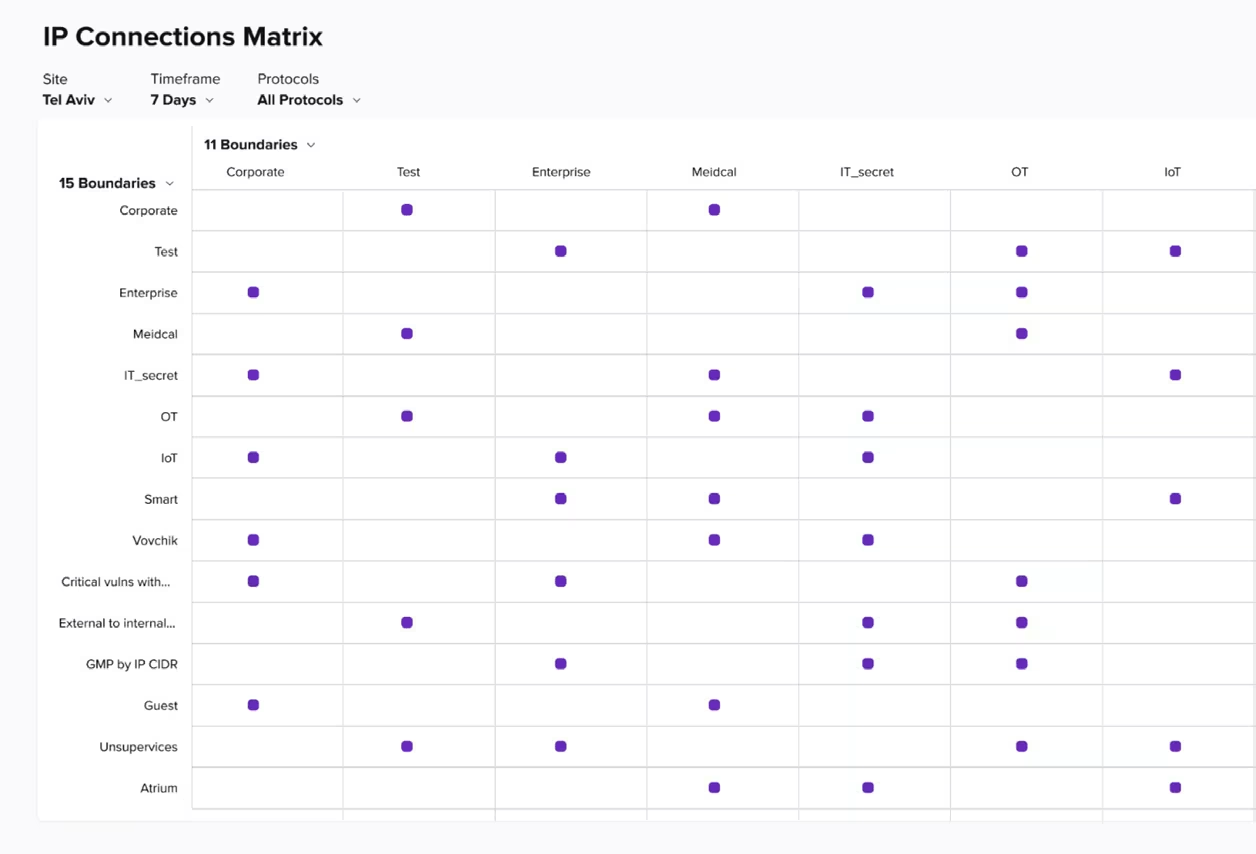
Armis analyzes asset communications and recommends network segmentation policies to reduce attack surface
How it works
- Observes actual device communication patterns over time
- Identifies devices that shouldn't communicate but do (segmentation gaps)
- Identifies devices that should communicate but are blocked
- Recommends segmentation policies based on device type, function and risk
- Validates segmentation is working (detects violations and communicates attempts through blocked segments) Business value: Quick visualization reveals architecture issues like excessive network bridges, poor segmentation or unintended network connectivity that could enable lateral movement
CMDB Enrichment and Automation
Armis automatically populates and enriches configuration management databases with accurate, real-time asset data
Data Provided
- Complete asset inventory (discovered devices)
- Device classification and attributes (manufacturer, model, OS, firmware)
- Vulnearbilities and risk scores
- Behavioral information (communication patterns, typical ports/protocols)
- Change history (when discovered, when configuration changed)
- Ownership and asset relationships
Feature Overview
Deployment Architecture
SaaS (Cloud-Native)
- All processing in Armis cloud (AWS-based)
- On-premises collectors gather data and forward to cloud
- Automatic updates, scaling, and maintenance
- 99.9% availability SLA
- Prefered for most deployments
On-Premises
- Full deployment on customer infrastructure
- Supports air-gapped environments
- Customer-managed updates and maintenance
- Data never leaves customer network
- Required for air-gapped or high-security environments
Collectors
- Physical Collectors: Hardware appliances for high-throughput environments (up to 7Gbps traffic analysis)
- Virtual Collectors: Deploy on VMware, Hyper-V or cloud (AWS, Azure, GCP)
- Kubernetes Collectors: Container-based deployment for modern infrastructure
- Broker Collectors: Lightweight software agents for multi-location environments
- API Collectors: Integrations with cloud platforms, vulnerability scanners, network devices
Integrations
Armis integrates with hundreds of security and IT tools. The latest list can be found on https://armis.com/integration-adapters
Compliance Reporting
Armis provides automated compliance reporting for:
- Healthcare: HIPAA, HITRUST, FDA requirements
- Industrial: IEC62443, NERC, CIP
- General: SOC2, ISO27001, PCI-DSS, GDPR, DORA, NIS2
- Government: FedRAMP, NIST, Cybersecurity Framework
Armis vs runZero: Realistic Comparison
Both Armis and runZero address asset visibility but with fundamentally different approaches and strengths.
Where Armis Excels
- Behavioral Threat Detection: Armis's primary strength is real-time anomaly detection, identifying suspicious device behavior indicating compromise. runZero discovers assets; Armis detects threats
- Asset Intelligence Engine scale: 6 billion+ assets provide unmatched classification accuracy and instant behavioral baselines. runZero's fingerprinting is really accurate, but doesn't have behavioral component
- Medical device specialization: Armis Medical Device Security is purpose-built for healthcare with clinical risk scoring, FDA integration, and HIPAA compliance. runZero discovers medical devices but doesn't provide healthccare-specific features
- OT protocol depth: Armis understands industrial protocols (MODBUS, DNP3, OPC-UA, Profinet, S7) and provides OT-specific threat detection. runZero discovers OT devices but doesn't analyze protocol behavior
- Vulnerability prioritization (VIPR): Armis consolidates vulnerabilities from multiple tools, prioritizes by business impact, and automates remediation workflow. runZero identifies vulnerabilities but doesn't provide this workflow. VIPR reduces alert volume 50:1 through deduplication alone.
- Early Warning Intelligence: Armis provides pre-disclosure threat intelligence 75-693 days before public disclosure. runZero has no equivalent capability
- Network segmentation recommendations: Armis analyzes communication patterns and recommends segmentation policies. runZero maps topology but doesn't recommend policies or validate segmentation
- Incident response enrichment: When incidents occur, Armis provides rich behavioral context showing device activity timeline and suspicious communication. runZero provides asset context only
Where runZero excels
- Speed to initial discovery: runZero achieves complete inventory in hours through active scanning. Armis passive discovery takes longer for complete visibility (typically days to weeks for full environment understanding)
- Active scanning precision: runZero's active fingerprinting identifies exact device models and firmware version with 99%+ accuracy. Armis relies on passive observation and behavioral patterns
- External attack surface scanning: runZero can scan external IP space to identity exposed infrastructure (web servers, management interfaces, cloud buckets). Armis focuses on internal networks only
- Unauthenticated discovery: runZero discovers devices without credentials through active probing. Armis requires network visibility through collectors or integrations
- Simplicity and cost: runZero is simpler to deploy and lower cost for pure discovery use cases. Armis is more comprehensive but more complex and commands enterprise pricing (and sizing).
- Multi-modal discovery: runZero combines active + passive + API integrations for comprehensive discovery in days. Armis primarily uses passive observation