ZPE Systems Nodegrid
Detection, Response & Disaster Recovery Out-of-Band ManagementOverview
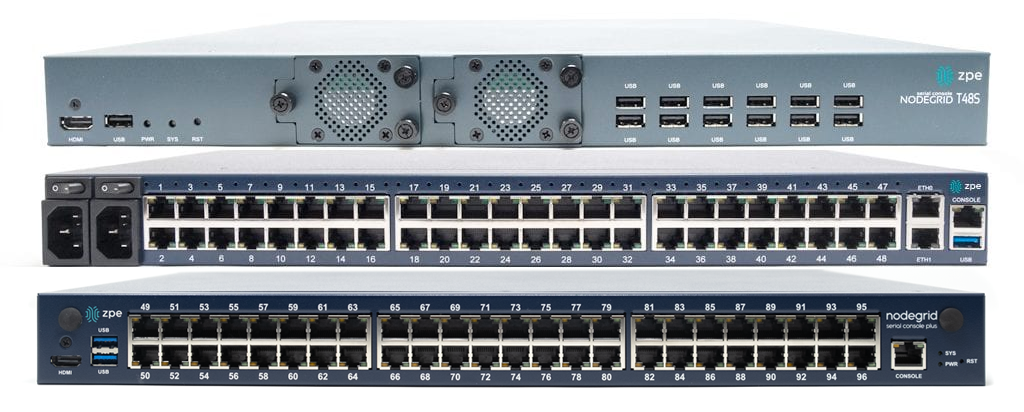
ZPE Systems is a networking and infrastructure management vendor headquartered in Fremont, California, best known for its Nodegrid platform and ZPE Cloud, which together deliver what the company brands as "Gen 3" out-of-band (OOB) management and an isolated management infrastructure (IMI) for data centers, campuses, and edge locations. Unlike traditional console servers that only provide serial access during outages, Nodegrid combines vendor-neutral OOB connectivity, embedded automation, and secure hosting of third-party applications and virtual machines, positioning it as both a management plane and an edge-compute platform.
ZPE Cloud extends this platform with SaaS-based, VPN-less management, zero-touch provisioning, and fleet-wide orchestration built on Google Cloud Platform (GCP), aiming to simplify global deployments and strengthen security through a Zero Trust approach.
ZPE's differentiation versus incumbents such as Opengear lies in three main areas: a focus on Gen 3 OOB (automation-ready, app-hosting, vendor-neutral hardware), the IMI concept for a physically and logically separated management plane, and cloud-native management and orchestration that goes beyond traditional, on-prem OOB tools. This positions ZPE well for customers modernizing networks for hybrid cloud, SASE, and AI workloads who need resilient operations, faster disaster recovery, and centralized automation across heterogeneous infrastructure.
Company and platform overview
ZPE Systems markets the Nodegrid product family as a services delivery and management platform that encompasses high-density serial consoles, branch routers, and edge devices, all running a Linux-based, venro-neutral OS capable of hosting third-party applications and containers. The platform is designed to centralize management of serial, USB, IPMI, power, and KVM interfaces, providing low-level access to network, server, and power infrastructure across data centers and remote sites. Nodegrid hardware integrates 4G/5G, WiFi, Ethernet and other interfaces for both production and out-of-band connectivity, allowing organizations to maintain management access even during primary network failures.
ZPE Cloud is delivered as a SaaS offering on top of GCP and can also be deployed as a virtual appliance for on-prem implementations where required. It provides cloud-based configuration and management of Nodegrid devices, including global visibility over connected devices and ports, single sign-on (SSO), and zero-touch provisioning (ZTP) from Day 0 to Day 2 operations. By decoupling sensitive configuration data from shipped hardware and keeping devices unconfigured until they securely pair with ZPE Cloud, the platform aims to reduce supply-chain and device-theft risks during branch rollouts.
3rd Generation out-of-band management
From Gen1/2 to Gen 3
Traditional (Gen 1) OOB devices functioned mainly as simple serial consoles, offering a "side door" into routers, switches, and servers when the production network failed. Second-generation solutions added higher density, cellular failover, and better monitoring, but still treated OOB primarily as a break-fix tool with limited programmability and little integration into modern automation workflows. ZPE defines its Nodegrid porfolio as the first Gen 3 OOB platform, characterized by an open Linux OS, app and container hosting, vendor-neutral integrations, and end-to-end automation capabilities that treat OOB as an independent programmable management plane rather than a single-purpose console.
In practical terms, Gen 3 OOB means that the same device providing serial and KVM access can also run automation tools like Ansible, Dockerized network utilities, or even security services, enabling closed-loop remediation and orchestration tasks to execute locally at the edge. This reduces reliance on distant automation controllers and central networks during outages, improving resilience and making the OOB layer an active participant in network operations, not just an emergency access channel.
Isolated Management Infrastructure (IMI)
ZPE promotes the concept of an Isolated Management Infrastructure, a physically and logically separate layer dedicated to management functions, which remains operational when the production network is down or compromised. Unlike traditional OOB that is often bolted onto the existing network, IMI is designed as a parallel management fabric that can run critical services such as DNS, monitoring, or firewalls independently of the primary data path. Very few OOB vendors currently offer IMI-like capabilities as a core platform feature, giving ZPE a differentiation narrative around resilience and security.
IMI is positioned as especially relevant for scenarios such as ransomware recovery, where teams must rebuild systems and test for reinfection without risking disruption to production or losing management access. By anchoring automation and access in an independent management plane, organizations can more safely perform recovery operations, patching, and forensic analysis while production systems are being restored or kept offline.
ZPE Cloud and cloud-based management
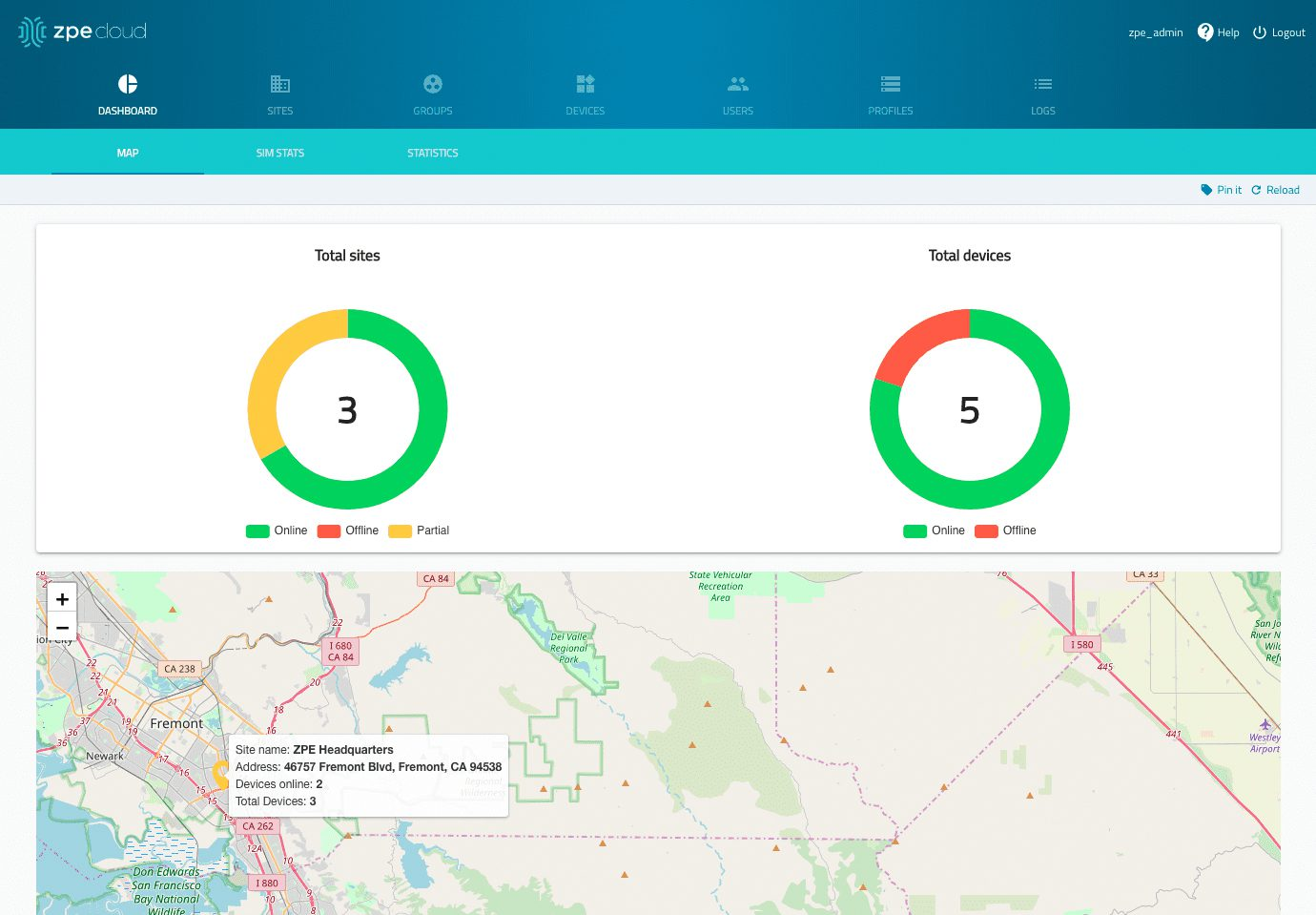 ZPE Cloud acts as the control tower for Nodegrid, providing cloud-based configuration, software and firmware updates, and centralized policy management across distributed environments. It offers 360° visibility of network-connected devices by aggregating information from Nodegrid's serial, USB, IPMI, power, and KVM connections, which allows operations teams to manage heterogeneous hardware through a single interface.
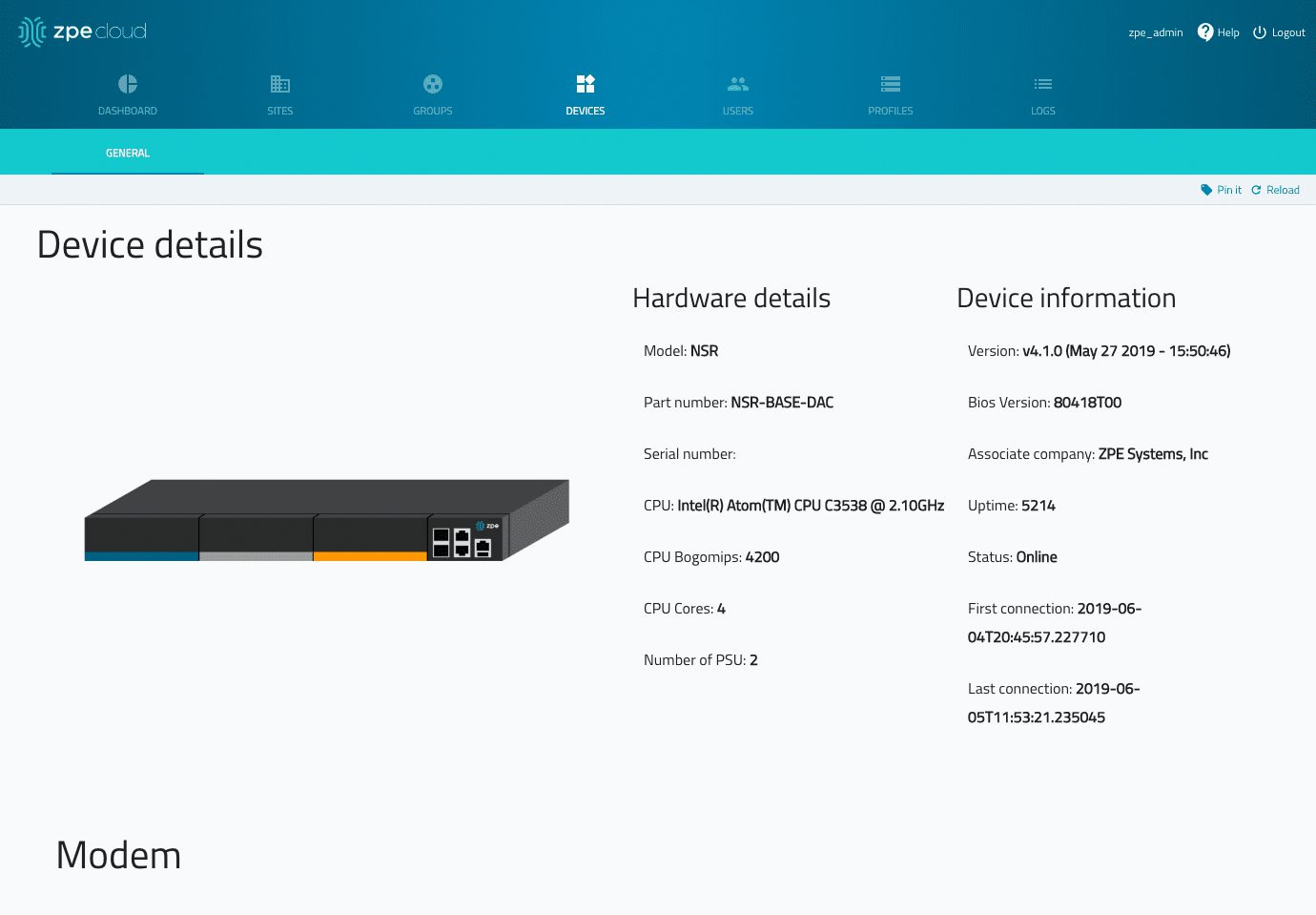
Key capabilities include SSO for administrator access, global configuration deployment, device grouping, and the ability to push automation scripts and orchestrations directly to Nodegrid devices from the cloud. The platform supports ZTP over WAN, enabling devices to be shipped unconfigured, powerd on at the branch, and then automatically claimed and configured by ZPE Cloud, which simplifies large-scale rollouts and reduces the need for on-site IT presence.
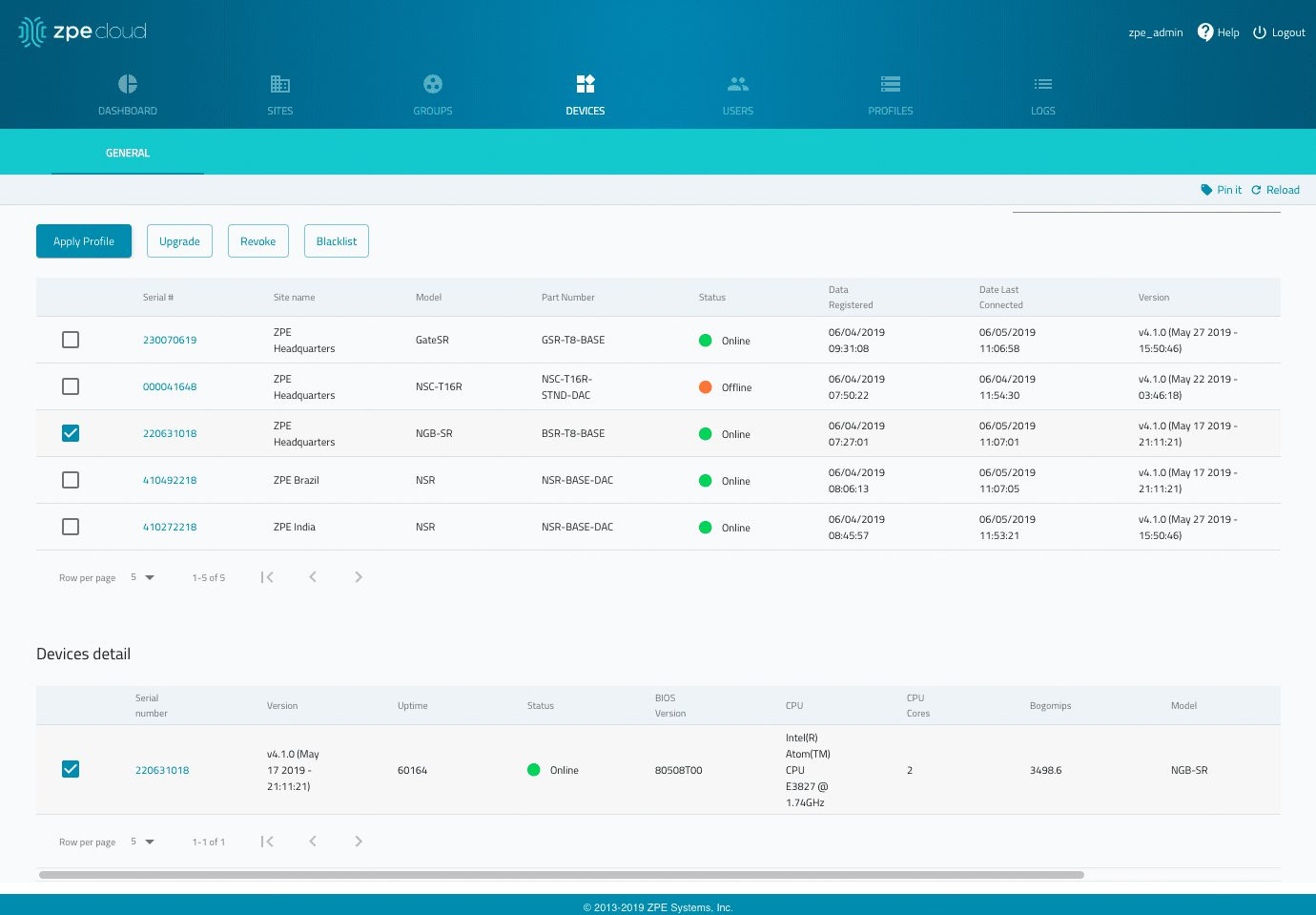
ZPE Cloud is also designed to provide VPN-less access, so administrators can reach devices and branch locations without juggling multiple VPN clients and IP address whitelists. Location-based features such as geofencing and GPS are used to ensure that only devices in expected locations can be provisioned, adding an additional layer of security to the deployment process.
Disaster recovery and business continuity
ZPE positions Nodegrid and ZPE Cloud as key components in network disaster recovery planning, emphasizing that resilience requires more than redundancy and backups: it needs an independent management plane to coordinate recovery. In scenarios like natural disasters, ISP outages, or cyber incidents, integrated 4G/5G and other redundant interfaces allow Nodegrid devices to maintain out-of-band connectivity so teams can diagnose and remediate problems remotely.
ZPE's network disaster recovery guidance highlights the need for documented runbooks, automation workflows, and the ability to rebuild configurations and infrastructure from known-good templates stored centrally rather than on local devices. ZPE Cloud supports this model by storing configurations and automation logic in the cloud or on a management appliance, enabling nodes to be re-provisioned quickly after replacement or wipe events using ZTP and orchestrated automation.
Isolated Management Infrastructure further reinforces diaster recovery by ensuring that essential monitoring and management tools remain operational and reachable, even when production services must be taken offline for containment or restoration. This separation reduces the risk that the same failure or compromise affecting production will simultaneously remove the visibility and control needed for recovery.
Target customers and positioning
ZPE's Gen 3 OOB and ZPE Cloud are primarily aimed at medium-to-large enterprises with distributed infrastructure, such as data center operators, retailers, service providers, healthcare, and public safety organizations that require high resilience and central automation. The platform is well suited for environments with diverse, multi-vendor equipment, where a vendor-neutral management and automation layer is preferable to device-specific tools
The company highlights use cases where network connectivity is mission-critical, such as first responders and public safety networks where its FirstNet-certified Nodegrid devices provide redundant connectivity options (Ethernet, WiFi, 4G/5G, satellite) and can host custom or third-party applications at the edge. This makes ZPE attractive to organizations with demanding uptime and security requirements that go beyond the capabilities of legacy console servers.
From a positioning perspective ZPE can be framed as a platform for "modern operations" and "resilient automation" rather than just a console server vendor, emphasizing Gen 3 OOB, IMI, and ZPE Cloud as a unified management and automation fabric. This narrative aligns with broader trends such as hybrid cloud, Infrastructure-as-Code, and SASE adoption, where a programmable, independent management plane helps simplify operations and improve security.
Easy entry-points
Organizations currently relying on aging, unsupported, or single-purpose console servers represent a strong low-hanging fruit segment for ZPE. Many of these environments face security risks from unpatched management devices and lack features such as modern encryption, strong authentication, or integration with IAM platforms. ZPE can position Nodegrid as both a security upgrade and an operational improvement, delivering TPM-backed secure boot, disk encryption, embedded firewalling, and SAML-based SSO as part of the migration
Another near-term opportunity lies in organizations embarking on large branch rollouts or refreshes, particularly those who struggle with pre-staging hardware or sending skilled staff on-site. ZPE Cloud's zero-touch provisioning and VPN-less access reduce the operational burden of these projects, making it easier for customers to justify a shift from legacy OOB to a Gen 3 platform that streamlines deployment and lifecycle management.
Customers pursuing network modernization initiatives (such as implementing SASE, SD-Branch or automation frameworks) are also strong candidates because they need a more programmable, centralized management layer across multi-vendor devices. Here, ZPE can highlight Nodegrid's ability to host Docker containers and virtual appliances, integrate with tools like Ansible or Chef, and serve as an execution point for automation workflows, all while maintaining independent OOB access.
Cross-sell and up-sell avenues
Once Nodegrid is deployed as an OOB or branch platform, ZPE can expand its footprint by layering on ZPE Cloud subscriptions for centralized, cloud-based management, ZTP and automation orchestration. Customers starting with on-prem management can be offered a path to hybrid or full SaaS management as their comfort with cloud control planes grows, creating recurring revenue opportunities.
The app-hosting and container capabilities of Nodegrid provide a natural cross-sell motion into security, observability, and automation ecosystems, as customers can run virtual firewalls, SD-WAN functions, log collectors, NAC engines, runZero explorers, or custom monitoring tools directly on the platform. This enables ZPE and partners to package validated solution stacks (such as secure branch in a box, SASE edge nodes, or AI-at-the-edge workloads) that leverage Nodegrid as a shared hardware and management base.
ZPE's focus on first-responder and public-safety communications, including FirstNet-certified devices, also creates opportunities to cross-sell into adjacent municipal, healthcare, and critical-infrastructure verticals that share similar resilience and compliance requirements. In these sectors, the combination of resilient connectivity, secure OOB access, and app hosting can support solutions ranging from telemedicine to critical-infrastructure monitoring and secure field operations.
Core Features
Gen 3 OOB hardware and connectivity
Nodegrid devices support high-density serial console connectivity along with USB, IPMI, power (PDU/UPS), and KVM interfaces, enabling low-level access to a broad range of infrastructure components. Integrated 4G/5G LTE, WiFi and Ethernet provide multiple paths for both production and management traffic, with cellular often used as an OOB or failover mechanism during outages. Flexible port configurations and support for legacy serial pinouts reduce the need for specialized adapters and simplify migrations from older console servers.
Open, Linux-based OS and app hosting
Nodegrid runs an open, Linux-based operating system that supports third-party automation and orchestration tools such as Docker and Ansible, along with customer-written escripts in multiple languages. Many models include x86 CPUs with sufficient resources to run virtual machines and Docker containers, allowing deployment of third-party security, networking, and monitoring applications directly on the device. This transforms the OOB device into an edge-compute node and centralizes operational tooling at the management layer rather than dispersing it across proprietary appliances
Security and Zero Trust foundations
ZPE emphasizes a Zero Trust Security Framework Foundation, including hardware security features like TPM 2.0, UEFI Secure Boot, and disk encryption, as well as an embedded firewall and SAML 2.0-based authentication integrations with providers such as Duo and Okta. ZPE Cloud complements this by enabling geofencing, GPS-based provisioning checks, and the practice of shipping unconfigured devices that only receive configurations once securely claimed, which reduces the risk of backdoor access if a device is intercepted.
VPN-less access through ZPE Cloud further tightens security by reducing the need for multiple VPN clients and static IP allowlists that can be misconfigured or exploited. With SSO and location-aware policies, administrators gain simplified but more controlled access to devices and sites from any location.
Cloud-based management and automation
ZPE Cloud centralizes configuration, firmware updates, backups, and monitoring for all managed Nodegrid devices, providing a single pane of glass for distributed environments. It enables automated provisioning and orchesteration from Day 0 (initial deployment) through Day 2 (ongoing operations), including pushing automation scripts to end devices and executing global changes across many sites.
The platforom is designed to scale with branch expansion, making it easier to add new locations without increasing management complexity, and can be consumed as SaaS or deployed as a virtual appliance for organizations with strict data-residency or control requirements. Mobile applications for ZPE Cloud further extend management capabilities to smartphones and tablets, allowing administrators to perform basic operations while away from their primary workstations.
Competitive comparison: ZPE Vs Opengear and others
A ZPE-authored comparison of out-of-band vendors evaluates competitors such as Opengear, Perle, and Lantronix against criteria like OOB and failover options, automation support, app hosting and management capabilities. Opengear's OM2200 series is highlighted for strong power-management support (working with over 100 power-vendor devices), integrated SAML authentication, and the ability to run Lighthouse playbooks, Python scripts, and Docker containers, including Guest OSes on certain models
However, the same comparison notes limitations for Opengear, such as more constrained OOB/failover options, ZTP being tied to upgraded software editions, and restricted automation language support for end-device automation. Some Opengear solutions are also characterized as on-prem-only with no third-party automation or orchestration integration and limited capacity to run guest OSes or third-party apps, depending on the model.
ZPE's Nodegrid, by contrast, is presented as offering borader OOB options (including built-in 5G/4G and WiFi), x86 CPUs capable of running Docker containers and VM applications, and vendor-neutral automation support across tools such as Chef, Puppet, Ansible, and Python. ZPE also differentiates with integrated cloud management (ZPE Cloud), IMI support, and a stronger emphasis on Zero Trust security foundations, which are not yet uniformly available across traditional OOB vendors